What Homeowners Should Know About Solar Water Heater Repair in Hawaii
Hawaii homeowners tend to pay close attention to hot water systems for a simple reason: when a water heater goes down, it affects the whole rhythm of the house. Showers, laundry, dishes, cleaning, guest use, rental turnover, all of it feels the disruption right away. When that system is solar, the repair decision often carries an extra layer of confusion. People assume solar automatically means a specialized niche that sits outside ordinary plumbing. In practice, the first thing to understand is much more basic and much more important: in Hawaii, plumbing is a licensed profession, and water heater work is not the kind of repair a homeowner should casually treat as a do it yourself emergency fix.
That point matters more than many people realize. Hawaii law is clear that a person may not act or hold themselves out as a plumber without a license, and plumbing work must generally be done by a licensed journey worker plumber or master plumber, with apprentices or helpers working only under supervision. There is a limited emergency repair exception for work in a person’s principal residence, but that exception does not apply to heaters, and it also does not apply to sewer lines, drains, gas lines, or certain other fixtures. For a homeowner dealing with solar water heater repair, that means the legal shortcut many people assume exists for urgent home repairs does not cover this kind of work.
That legal framework shapes nearly every practical decision that follows, from who you call to how quickly you authorize service.
Why solar water heater repair in Hawaii deserves careful handling
A standard hot water problem is already inconvenient. A solar setup adds coordination. The system may involve plumbing components, and depending on the repair scope, some projects in Hawaii can also trigger the need for properly licensed electrical work. State guidance for certain wastewater projects specifically notes that some scopes may require a licensed plumber and or electrician, and while that guidance is not written as a blanket rule for every water heater issue, it reflects a broader reality homeowners should keep in mind: once a repair reaches beyond something minor and crosses into regulated trade work, licensing matters.
That is why the old instinct to search “plumber near me” and book the first person with a truck can be risky if you do not check credentials first. Marketing language is easy to post online. Licensing is what counts. The Hawaii Department of Commerce and Consumer Affairs has made it plain that plumbing contractors and electrical contractors must employ licensed plumbers and electricians to perform the actual work. Homeowners should not settle for vague assurances that “our crew handles that all the time.” The right question is whether the actual people doing the repair are properly licensed for the work involved.
I have seen homeowners focus first on speed, especially when guests are arriving or a vacation rental turnover is looming. That instinct is understandable. The better move is to balance speed with compliance and competence. Fast service is useful only if the work is legal, safe, and correctly done.
The licensing issue is not a formality
Some homeowners think licensing is mostly about paperwork. In Hawaii, it is much more than that. The state regulates who can perform plumbing work, and plumber license renewals currently include continuing competency tied to the 2021 Uniform Plumbing Code for the present renewal cycle ending June 30, 2027. That requirement tells you something valuable even if you never read a code book yourself. It means licensed professionals are expected to stay current with the standards governing their trade.
For a solar water heater repair, that matters because repair work often looks simple from the outside and turns out to be more involved once someone starts diagnosing the problem. A homeowner might only know that hot water is inconsistent, that a leak has appeared, or that the system is not performing as expected. A licensed plumber approaches that situation with both legal authority and code-based training. An unlicensed operator may still sound confident, but confidence is not a substitute for state oversight.
This is especially important when homeowners are tempted to rely on a handyman for “just a quick fix.” In Hawaii, plumbing is not a casual side offering. If the job is plumbing work, the person doing it needs the right license. That is not just a best practice. It is the rule.
What counts as an emergency, and what does not
This is where a lot of confusion starts. Hawaii law does recognize a limited emergency plumbing repair exception in a person’s principal residence. Homeowners hear that and assume they can proceed with any urgent repair if the problem is happening now. The catch is in the exceptions to the exception. The emergency allowance does not apply to heaters. So if your solar hot water system fails on a Friday evening, or starts leaking the day before family arrives, it is still not the kind of repair that falls into that homeowner emergency carveout.
That distinction is easy to miss, but it matters. It also affects related work people sometimes bundle together in a crisis. The same law does not extend that exception to drains or sewer lines either. If a homeowner is facing several plumbing issues at once, maybe a water heater problem plus a clogged line, neither should be approached as a free pass for unlicensed repair. Keywords like drain cleaning and sewer line repair show up in local service directories all the time, but homeowners should remember that those are regulated scopes when they involve actual plumbing work.
The practical lesson is straightforward. If the issue involves your solar water heater, plan on calling a licensed plumber rather than trying to stretch the meaning of “emergency” to justify unlicensed work.

What to look for when hiring help in Kona or elsewhere in Hawaii
If you search for a plumber Kona homeowners can hire, or simply type “plumber near me,” you will find companies advertising a wide range of services. In Kailua-Kona and West Hawaii, local listings commonly show providers promoting residential plumbing, commercial plumbing installation, water heater repair, leak detection, drain cleaning, sewer line repair, and even solar water heating services. That variety can be useful, but it also means homeowners need to ask a few grounded questions before booking.
The strongest companies tend to be the ones that do not get defensive when you ask who will actually perform the work. They should be able to explain their licensing structure clearly, especially if the job may involve more than one trade. If a plumbing contractor is sending a crew, the actual plumbing work needs to be done by licensed plumbers. If related electrical work is part of the scope, the same principle applies on the electrical side.
A short screening conversation can save a lot of trouble later:
- Are you licensed in Hawaii for the plumbing work involved?
- Who will actually perform the repair on site?
- If the scope expands, do you handle that with properly licensed personnel?
- Do you regularly perform water heater repair, including solar water heater repair?
- Can you explain what part of the system you believe needs diagnosis before quoting a final repair?
Those questions are not confrontational. They are practical. They also tend to separate established professionals from people who rely on broad advertising language and hope the customer will not ask follow-up questions.
Solar does not mean “not plumbing”
This is one of the more persistent misconceptions I hear from homeowners. Because the system includes solar equipment, some people assume the repair falls into a category that has little to do with a plumber. In reality, many homeowners first need a licensed plumbing professional because the system is still a water heating system, and Hawaii regulates plumbing work accordingly.
That does not mean every issue is purely plumbing. It means plumbing licensing is central, not optional. If the repair scope turns out to involve other regulated trades, then those trades need licensed professionals as well. The point is not to guess in advance which part is at fault. The point is to start with the legal and practical reality that a solar water heater problem is not outside the plumbing world.
This becomes even more important when the homeowner is comparing general service providers with companies that advertise niche specialty work. Specialized experience can be valuable, but specialty branding should never be used to blur licensing requirements. A company can market itself around solar systems and still need licensed plumbers to do the plumbing work. The state does not waive that requirement because the word “solar” appears in the service description.
Cost pressure leads many homeowners in the wrong direction
Repair costs matter. Nobody likes an unexpected water heater bill. On the Big Island and elsewhere in Hawaii, people often juggle maintenance expenses carefully, especially when the home is older, partially occupied, or used as a rental. That financial pressure can make low-priced offers sound attractive. The problem is that the cheapest repair is often the one with the highest long-term risk if it is done outside the licensing rules or without the right trade oversight.
I have seen a familiar pattern. A homeowner gets a verbal quote from someone who says they “do plumbing work,” authorizes a shortcut repair, and only later discovers that the system still is not operating correctly or that another contractor will not touch the previous work without redoing part of it. Once that happens, whatever money seemed saved disappears quickly.
A more disciplined approach is to think in terms of value rather than just price. For solar water heater repair in Hawaii, value means a properly licensed person diagnosing the problem, doing code-conscious work, and explaining whether the job stays within plumbing or may involve additional licensed trades. That kind of clarity is worth paying for because it reduces repeat visits, conflicting opinions, and avoidable compliance issues.
Rentals, second homes, and principal residence confusion
Another point that trips people up is the difference between a principal residence and other property types. The limited emergency repair exception in Hawaii applies only in a person’s principal residence, and even there it does not cover heaters. That means the exception is even less useful than many people assume if the property is a second home, a rental, or a part-time occupancy home.
This is highly relevant in Hawaii, where many properties are not occupied in the same way year-round. If an owner or property manager is dealing with a hot water crisis in a rental unit, it is easy to feel pressure to get anyone available on site immediately. Legally and practically, that is exactly when discipline matters most. The right response is to bring in a licensed plumber or licensed contractor employing licensed plumbers for the actual work.
For owners juggling tenant needs, a responsive emergency plumber can still be essential. The term has real value in a service context because some licensed companies do offer urgent response. The key is not to confuse emergency availability with a legal waiver of licensing requirements. An emergency plumber should still be licensed for the work being performed.
Commercial properties and mixed-use buildings need extra attention
Many local plumbing companies in Hawaii advertise both residential and commercial work, and that overlap can be useful for owners of mixed-use properties, associations, or businesses with on-site hot water systems. If a provider handles commercial plumbing installation and has experience across larger systems, that can help when the repair needs careful coordination with building operations.
Commercial property owners should be especially cautious about scope creep. What starts as a simple service call can evolve if the diagnosis reveals related plumbing deficiencies or if another building system is affected. In that setting, the benefit of working with a commercial plumber is often less about branding and more about process. Commercial work tends to demand clearer scheduling, a stronger paper trail, and closer attention to who is authorized to perform each part of the job.
That matters in Hawaii because the licensing rules do not disappear just because a property is bigger or busier. If anything, the operational stakes are higher. A hotel, restaurant, retail building, or multifamily property cannot afford repair delays caused by unclear responsibility. Even homeowners in a small mixed-use building should think ahead about whether the contractor they call can handle the broader context if the problem turns out not to be isolated.
How to talk with a contractor without getting lost in jargon
You do not need to be an expert in plumbing codes or solar equipment to have a productive repair conversation. What you do need is a practical way to keep the discussion grounded. Ask the contractor to explain, in plain terms, what they have confirmed, what still needs diagnosis, and which licensed trades may be required based on the scope. A good professional can do that without hiding behind technical language.
It also helps to separate diagnosis from final repair approval. Homeowners often want a full answer in the first phone call, but many legitimate providers will be careful not to promise too much before seeing the system. That is usually a good sign, not a bad one. Overconfident remote diagnosis often leads to disappointment later.
Pay attention to whether the contractor speaks clearly about who will perform the work. The Hawaii licensing framework puts real weight on the qualifications of the people actually doing the job, not just the company name on the invoice or truck. If the answers are vague, keep asking.
A practical standard for deciding who to trust
Most homeowners are not trying to become experts in contractor law. They just want hot water back and want the repair handled properly. That is reasonable. A useful standard is to look for three things at once: legal compliance, scope clarity, and relevant service experience.
Here is a simple way to think about it:
- Legal compliance means the work is being handled by properly licensed professionals in Hawaii.
- Scope clarity means you understand whether the issue is staying within plumbing or may require other licensed trades.
- Relevant experience means the provider regularly performs water heater repair and, where applicable, solar water heater repair.
- Communication means you get straight answers about who is coming, what they found, and what they recommend.
- Urgency management means the company can respond promptly without treating urgency as an excuse to bypass the rules.
That framework works whether you are calling a neighborhood plumber, a plumber Kona residents have used for years, or a larger company that also handles commercial plumbing installation and broader building work.
The broader plumbing relationship matters more than one repair
A solar water heater problem often reveals something else about home maintenance: plumbing issues rarely stay isolated https://alexisvkub020.focalledger.com/posts/how-to-verify-a-plumber-before-scheduling-work-in-hawaii forever. Homeowners who already have a trusted licensed plumber usually navigate hot water repairs with less stress because they know whom to call, how the company communicates, and whether the crew handles related work responsibly. Homeowners who wait until a breakdown happens are forced to make decisions under pressure.
That is why even if your immediate concern is solar water heater repair, it can be worth choosing a company with a wider service base. Many Hawaii providers also advertise drain cleaning, sewer line repair, leak detection, and residential or commercial service. The advantage is not that every problem should be bundled into one visit. The advantage is continuity. If the same licensed provider can address the current issue and advise on related plumbing concerns later, you spend less time starting from scratch with every service call.
Still, broader service offerings should not distract from the central question. Whether the provider is a residential plumber, a commercial plumber, or an emergency plumber with after-hours availability, the actual plumbing work must be done by licensed professionals. That is the nonnegotiable baseline.
What homeowners should carry forward
If there is one idea worth keeping front and center, it is this: solar water heater repair in Hawaii is not a casual maintenance category. It sits squarely inside a regulated trade environment, and the state’s rules are specific enough that homeowners should not rely on assumptions. The limited emergency repair exception does not cover heaters. Plumbing work generally must be performed by licensed journey worker or master plumbers, with apprentices and helpers under supervision. Contractors must employ licensed plumbers to perform the actual plumbing work. And current continuing competency requirements reinforce that licensed plumbers are expected to stay current with the governing code.
For homeowners, that translates into a practical path. Slow down just enough to verify licensing, ask who will actually do the work, and choose a provider who can explain the scope without hedging. Whether you are looking for a plumber near me, a plumber Kona property owners trust, or a company that also handles commercial plumbing installation, the right solar water heater repair decision starts with the same principle every time: get the right licensed professional on the job.
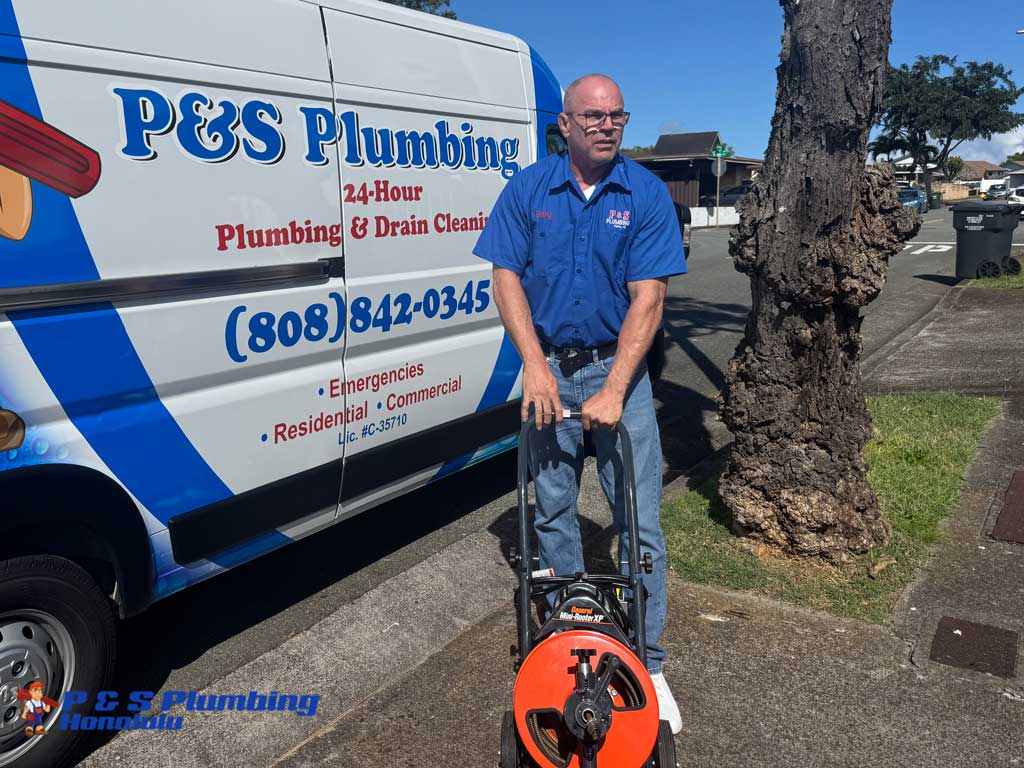
Name: P&S Plumbing Kona
Address: 73-5573 Kauhola St Bay #11, Kailua-Kona, HI 96740, United States
Phone: 808-325-3892
Website: https://www.psplumbinghawaii.com/
Email: [email protected]
Hours:
Sunday: Open 24 hours
Monday: Open 24 hours
Tuesday: Open 24 hours
Wednesday: Open 24 hours
Thursday: Open 24 hours
Friday: Open 24 hours
Saturday: Open 24 hours
Time zone: Hawaii-Aleutian Time
Open-location code / Plus code: MXQJ+P4 Kailua-Kona, Hawaii, USA
Map/listing URL: https://www.google.com/maps/search/?api=1&query=Google&query_place_id=ChIJwc_thcwNVHkRhwCIvILuP8w
Embed iframe:
Socials:
https://www.facebook.com/psplumbingkona/
https://x.com/PSPlumbingKona
https://soundcloud.com/p-s-plumbing-kona
https://www.youtube.com/@PSPlumbingKonaHawaii
P&S Plumbing Kona provides plumbing services from its Big Island headquarters on Kauhola Street in Kailua-Kona.
The official website lists Kona phone service at 808-325-3892 and also lists Hilo and Honolulu service contacts.
P&S Plumbing provides residential plumbing, commercial plumbing, drain and sewer service, water heater work, plumbing repairs, leak detection, fixture repair, kitchen plumbing, bathroom plumbing, and emergency plumbing support.
The official site lists the Big Island headquarters at 73-5573 Kauhola Street, Bay 11, Kailua Kona, HI 96740.
The company’s official site lists Hawaii State License Number CT-35710 and describes P&S Plumbing as licensed and insured.
Customers can contact P&S Plumbing Kona for drain cleaning, sewer-line concerns, water heater service, clogged toilets, fixture repairs, plumbing leak detection, pipe-lining needs, bathroom remodeling plumbing, kitchen plumbing, commercial plumbing, and urgent plumbing requests.
For plumbing service in Kailua-Kona and West Hawaii, call 808-325-3892 or visit https://www.psplumbinghawaii.com/
The public map listing uses plus code MXQJ+P4 Kailua-Kona, Hawaii, USA and can help customers find P&S Plumbing Kona near Kauhola Street.
Popular Questions About P&S Plumbing Kona
What does P&S Plumbing Kona provide?
P&S Plumbing Kona provides plumbing services for residential and commercial customers, including drain cleaning, sewer and drain service, water heater service, plumbing repairs, fixture repair and installation, leak detection, kitchen plumbing, bathroom plumbing, and 24-hour emergency plumbing.
Where is P&S Plumbing Kona located?
The official contact page lists the Kona location at 73-5573 Kauhola Street, Bay 11, Kailua Kona, HI 96740. The listing address is 73-5573 Kauhola St Bay #11, Kailua-Kona, HI 96740, United States.
What phone number should Kona customers call?
The official website lists Kona phone number 808-325-3892.
What is the email address for P&S Plumbing Kona?
The email address is [email protected].
What are P&S Plumbing Kona’s hours?
The listing hours show P&S Plumbing Kona as open 24 hours a day, seven days a week, Hawaii-Aleutian Time. The official website also references 24-hour emergency plumbing service.
Is P&S Plumbing licensed?
The official website lists Hawaii State License Number CT-35710. Customers can confirm license status directly with the relevant Hawaii licensing authority before hiring.
Does P&S Plumbing Kona offer emergency plumbing?
Yes. The official website references 24-hour emergency plumbing service and emergency services availability.
Does P&S Plumbing handle water heaters?
Yes. The official website lists water heater installation and repair, including tankless, solar, conventional water heaters, and boiler setup and repair.
What areas does P&S Plumbing serve from Kona?
The official service-area page lists Big Island / Kona communities including Kona, Holualoa, Kukio, Waikoloa Village, Kalaoa, Captain Cook, Kahaluu-Keauhou, Keauhou, Kainaliu, Waimea, Puako, and Kealakekua.
How do I contact P&S Plumbing Kona?
Call 808-325-3892 or visit https://www.psplumbinghawaii.com/. Social profiles: Facebook, X, SoundCloud, and YouTube.
Landmarks Near Kailua-Kona, HI
Kauhola Street: The street listed for P&S Plumbing Kona’s Big Island headquarters and a practical reference point for the Kailua-Kona location.
Queen Kaʻahumanu Highway: A major West Hawaii route connecting Kailua-Kona, Kona International Airport, Waikoloa, and nearby coastal communities.
Ellison Onizuka Kona International Airport: A major transportation landmark north of Kailua-Kona and near local service routes.
Kailua-Kona town: A central West Hawaii community served by local plumbing contractors.
Old Kona Airport State Recreation Area: A well-known Kailua-Kona landmark near residential and commercial areas.
Kailua Pier: A central waterfront landmark in Kailua-Kona and a common local reference point.
Aliʻi Drive: A major coastal route with homes, condos, restaurants, shops, and visitor properties.
Honokōhau Harbor: A marina and commercial harbor area near Kailua-Kona and local business routes.
Kaloko-Honokōhau National Historical Park: A major cultural and coastal landmark north of Kailua-Kona.
Keauhou: A South Kona community with homes, condos, resorts, and plumbing service needs.
Holualoa: An upland Kona community with residential properties and local businesses.
Waikoloa Village: A West Hawaii community listed on P&S Plumbing’s service-area page.
Waimea: A Big Island community listed on P&S Plumbing’s service-area page.
Kealakekua: A South Kona community listed on P&S Plumbing’s service-area page.
Captain Cook: A South Kona community listed within P&S Plumbing’s Big Island / Kona service-area references.
For residential plumbing, commercial plumbing, drain cleaning, sewer-line repair, water heater service, leak detection, fixture work, bathroom plumbing, kitchen plumbing, or 24-hour emergency plumbing near these Kailua-Kona and West Hawaii landmarks, contact P&S Plumbing Kona at 808-325-3892 or visit https://www.psplumbinghawaii.com/